
4 PS1 Platformers: Crash, Spyro, Rayman and Jumping Flash
Choose Crash Bandicoot: Warped for a directed obstacle-course adventure, Spyro 2: Ripto's Rage! for exploring colourful 3D spaces, Rayman for a 2D platforming challenge, or Jumping Flash! for an unusual first-person view of the genre. They reward different kinds of attention even though jumping connects them all.
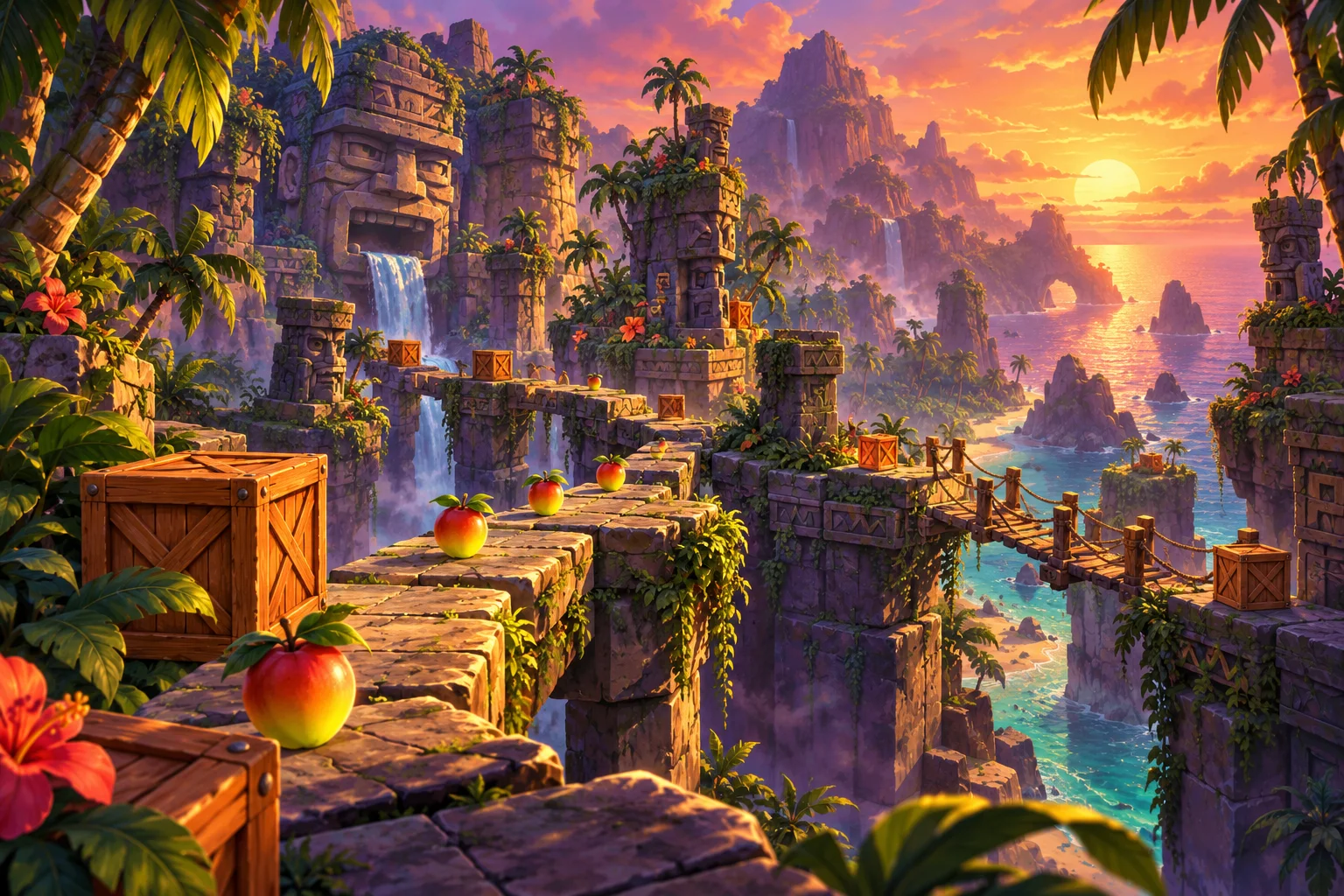
This selection is about movement and discovery. It sits alongside our broader best PS1 games shortlist, with more detail to help you decide which platformer fits the way you enjoy playing.
On this page
Four different ways to enjoy a platformer
Crash Bandicoot: Warped
Choose it for: Following a route and refining execution.
Keep in mind: Replaying tricky obstacles is part of the appeal.
Spyro 2: Ripto’s Rage!
Choose it for: Exploration and collecting.
Keep in mind: Looking around is as important as moving forward.
Rayman
Choose it for: 2D jumps and obstacle patterns.
Keep in mind: A bright appearance does not mean a forgiving challenge.
Jumping Flash!
Choose it for: First-person jumping and height.
Keep in mind: A different perspective requires adjustment.
Think about the part of a level you enjoy most. Is it finally landing a difficult jump, finding a hidden route, or understanding an unusual control idea? That answer is more useful than choosing only by how familiar a character looks.
Crash Bandicoot: Warped: enjoy the route
Warped is the third original PlayStation Crash adventure. Its directed stages make a good choice when you like having an obvious route and improving how you travel through it. The attraction is learning what an area asks of you, then putting those movements together more confidently.
Warped is the third main platformer in the original trilogy. The Crash Bandicoot PS1 trilogy guide compares all three and explains why a newcomer might start with Crash 2 instead.
Start by finishing a stage before trying to optimise every collectible or attempt. A successful first route gives you a mental map; on a return visit, you can focus on the parts you missed. Treat an unfamiliar hazard as something to observe, not a reason to rush through the next attempt.
This recommendation means the PS1 release. The N. Sane Trilogy is a later recreation of the original three games with its own changes. Advice about that trilogy should not automatically be applied to the original disc edition.
Spyro 2: Ripto’s Rage!: leave room to explore
Spyro 2 puts the emphasis on moving through colourful environments, looking for objectives and discovering more of a world. It is the alternative here for someone who would rather explore a space than repeatedly perfect one prescribed sequence of jumps.
To choose your own starting point, see the Spyro PS1 trilogy comparison for the original game, Ripto’s Rage! and Year of the Dragon, including regional title differences.
Give yourself time to look behind the obvious route. When you encounter a place you cannot reach immediately, remember where it is and continue learning the level instead of assuming every collectible must be collected on the first pass. That approach keeps exploration from turning into frustration.
Choose Spyro when curiosity is what makes you return to a game. Choose Crash when the satisfaction comes more from executing a known route cleanly. Both can involve replaying areas, but the reason you want to revisit them can be quite different.
Rayman: a 2D alternative with demanding jumps
The original Rayman is a side-scrolling platformer with a distinctive illustrated world. Rayman's punch and helicopter-style glide are part of the adventure's identity, alongside rescuing Electoons and progressing through varied environments. It offers a different visual and spatial problem from the 3D choices above.
Do not choose it solely because its colourful presentation suggests an effortless game. Precise timing and learning obstacles are central to the experience. If you enjoy observing a pattern and improving the next attempt, that challenge can be the reason to play.
Later collections can offer accessibility options or instant unlocks. Those are edition-specific features, not a description of the original PlayStation release. Make sure the guide you follow is written for the version you are actually playing.
Jumping Flash!: see the jump from another angle
Jumping Flash! puts you in the role of Robbit, a robotic rabbit sent after Baron Aloha. Its first-person perspective makes it the most unusual recommendation in this group. Height, landing and the view of your surroundings become part of the novelty.
Choose it when you want a short list to include a genuinely different design idea, rather than four variations on the same mascot adventure. Spend the opening moments understanding how a jump looks from this perspective. A familiar genre can still ask you to build a new sense of distance.
If that viewpoint feels uncomfortable, one of the third-person or side-scrolling choices may be more enjoyable. There is no need to force a particular perspective simply because a game has historical importance.
Make movement comfortable before chasing completion
Feature availability: external gamepads, Save / Load State and optional Autosave on Exit require EMUspace Pro. Enable Autosave on Exit if you want to use it, and exit the game normally; do not rely on a crash or forced app closure to save progress.
For a first EMUspace session, follow the PS1 setup instructions and game import guide. Check movement and jumping somewhere safe before tackling a demanding section. A compatible Bluetooth controller is available as an alternative to touch controls; the save states and controllers guide explains the app's controls.
Use the game's normal save system alongside EMUspace's save/load and Autosave on Exit. Saving at a clear stopping point makes it easier to remember the next objective. If you prefer PSP-era character adventures, compare our PSP platformer picks.
Which platformer fits your mood?
Which is best for exploring?
Spyro 2 is our exploration-led recommendation. Rayman and Crash are stronger choices when the challenge of getting through an obstacle sequence is what you want.
Which offers the biggest change of perspective?
Jumping Flash! Its first-person view makes it a useful contrast even if you already know several 3D platformers.
Are these tested performance ratings for EMUspace?
No. The list compares game design and player preferences. It does not supply measured frame rates, completion-time estimates or a device-by-device compatibility rating.
Sources and edition notes
Publisher sources support the game and edition details below. Our selection advice is editorial; it is not a measured performance comparison.