
God of War PSP Games: Order and Which to Play First
The two original God of War games made for PSP are Chains of Olympus and Ghost of Sparta. Start with Chains of Olympus if you want the handheld release order, then play Ghost of Sparta. Neither is a portable version of God of War II or III.
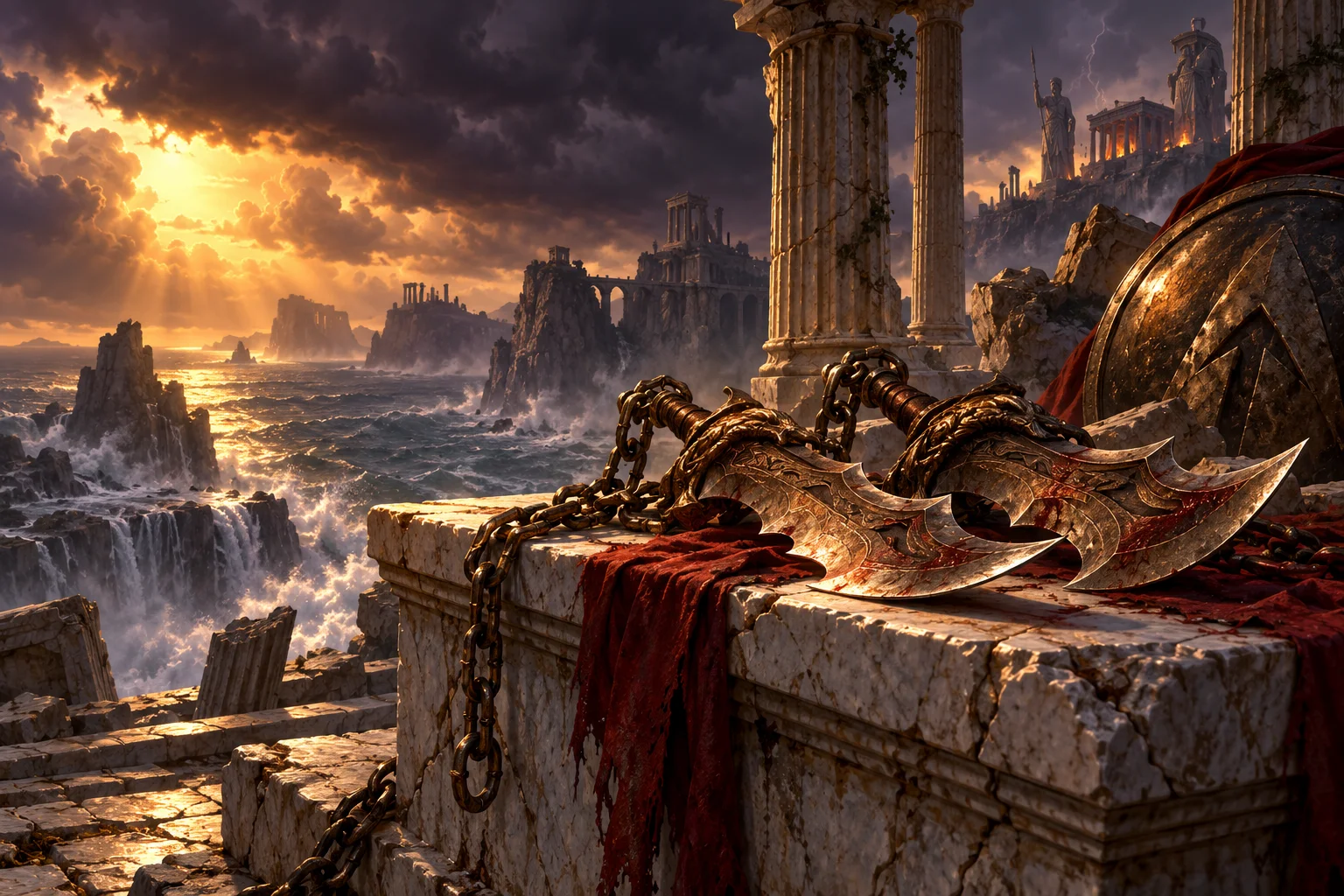
Both are character-action adventures built around Kratos, close-range combat and mythological settings. The decision is about the story you want to begin with and whether you prefer discovering the pair in sequence. For alternatives outside the series, our PSP action games guide compares other combat styles.
On this page
Release order and story order
Chains of Olympus arrived first, in 2008; Ghost of Sparta followed in 2010. The relative story order of the PSP pair is the same: Chains of Olympus comes before Ghost of Sparta.
Within the wider Greek saga, Chains of Olympus is set before the original God of War, during Kratos’s service to the gods. Ghost of Sparta takes place after the original God of War. That makes the two PSP games separate chapters around the first main game, rather than a continuous two-part adaptation of it.
For a first visit, do not keep interrupting one game to chase a perfect timeline. Finish the campaign you start. If you already know the original God of War, Ghost of Sparta provides additional context for Kratos without requiring a replay of Chains first.
Choose Chains of Olympus for the starting point
Chains of Olympus is the natural recommendation when your goal is to experience how the series first adapted to PSP. Begin here if you intend to play both and would rather see the earlier portable design before its follow-up.
Treat your opening session as combat practice. Learn the difference between continuing a combo and leaving yourself time to respond. Against an unfamiliar enemy, a short attack followed by a defensive reaction is a better experiment than committing to the longest sequence you can input. Once you understand the opening, increase your commitment.
This approach also makes it easier to separate control mistakes from tactical ones. If you repeatedly miss a defensive input, practise it away from a demanding encounter before deciding the difficulty is wrong for you.
Choose Ghost of Sparta for another chapter of Kratos
Ghost of Sparta follows Kratos after his rise to godhood and places more attention on his personal history. Choose it first if that is the story you specifically want, especially if you already understand the original game’s ending. You are not required to finish the earlier PSP title to operate its controls.
For someone planning a complete handheld playthrough, saving Ghost of Sparta for second gives each game room to establish its own identity. Avoid judging the pair only by screenshots: combat flow, encounter pacing and your interest in the story matter more than which image looks more elaborate.
Which editions belong in a PSP library?
Look for the PSP editions carrying the exact subtitles Chains of Olympus or Ghost of Sparta. Collections and remasters for other PlayStation systems are different releases. A similar cover or the same story does not make their files interchangeable.
After importing your own supported game file, check the title screen before investing time in a save. The PSP setup guide for iPhone covers the EMUspace side; this article is about choosing a game, not locating downloads.
A practical first-session plan
Start a new game, play through its introductory teaching sequence, and use the game’s normal save feature when offered. Before ending, make sure you know which campaign and edition the save belongs to. If you use EMUspace Pro, Save/Load is available from the game card and pause menu, with optional Autosave on Exit; our saving and controller guide explains those tools.
Keep story progress separate from combat practice where possible. A save state before a difficult encounter can support experimentation, but loading an older state also returns the emulated game to that earlier moment. Do not overwrite your most useful progress point simply because the current fight is going badly.
Keep exploring
Sources and edition notes
This guide discusses the original PSP releases. Publisher articles about later reissues are used for historical context; reissue features are not assumed to exist in the originals or in EMUspace.