
Patapon 1, 2 or 3: Which PSP Game Should You Start With?
Start with Patapon for the original idea, Patapon 2 for an expanded army-based adventure, or Patapon 3 if developing powerful individual heroes is what interests you most. The highest number is not automatically the closest match for every player.
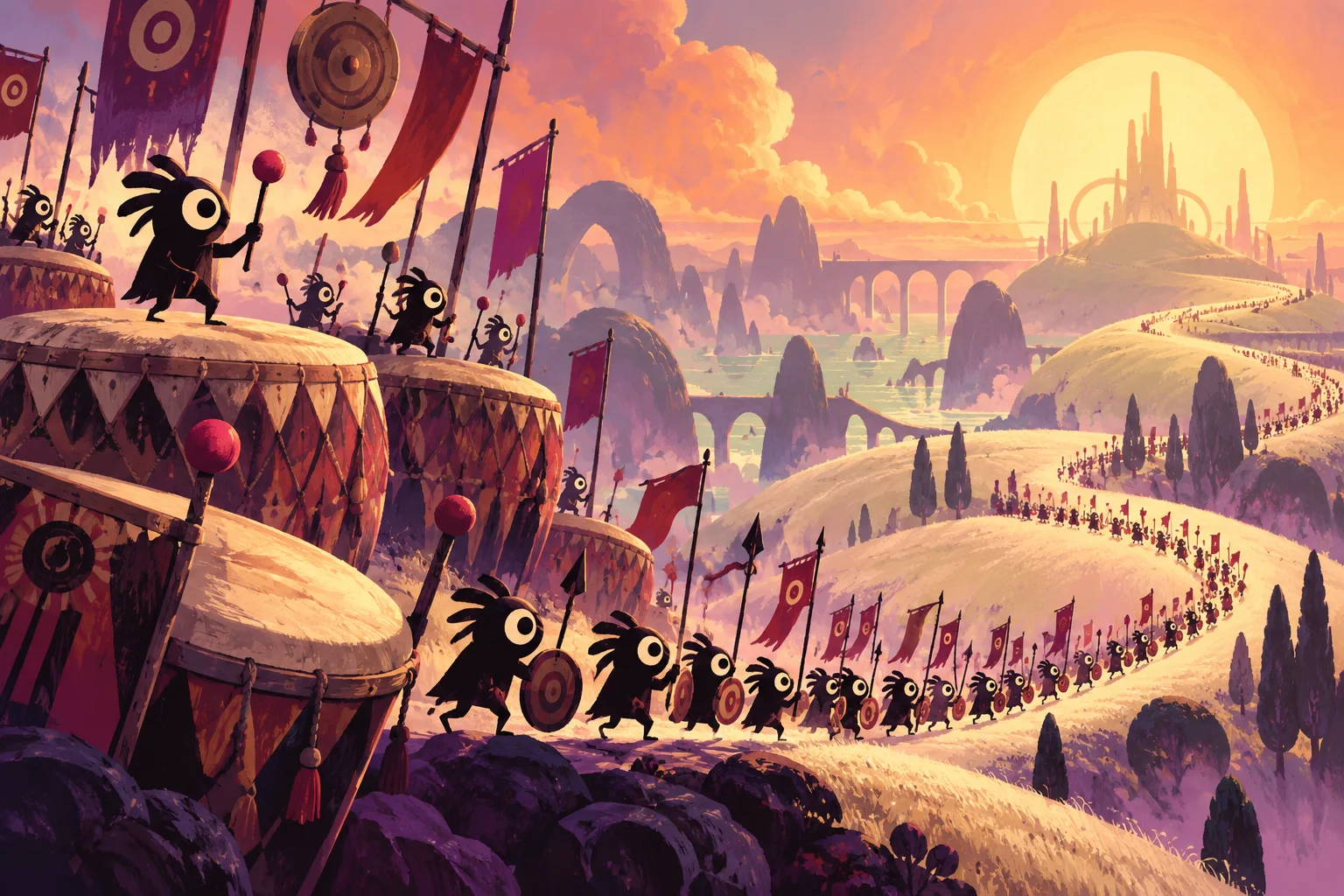
The series combines rhythm input with directing characters in battle. That is a different experience from selecting moves at leisure in a turn-based PSP strategy game. Your ability to keep a command going matters alongside preparation.
On this page
Patapon: learn the original rhythm
Choose the first game if you want to understand the foundation before exploring the sequels. Your early attention should be on entering a command cleanly and recognising the response rather than trying to win every encounter through faster tapping.
Think in complete phrases. Listen to the rhythm, input the command and leave space for the response. If you lose the pattern, recover deliberately instead of adding extra presses in the hope of catching up.
This is a recommendation for learning the basic idea with fewer sequel-specific expectations. It is not a claim that the first game is always the easiest or that release order is compulsory.
Patapon 2: keep the army, add more development
Patapon 2 expands the original with additional content and the Hero Patapon. The hero can be customised, and accurate commands play a role in its special attacks. The sequel also develops the ways your units evolve.
Pick it if you want to stay close to the army-command identity while gaining more things to develop. The useful question is whether you enjoy preparing the group as well as keeping time during the battle.
When a mission goes badly, separate rhythm mistakes from preparation problems. First test whether you can issue the intended commands consistently. Only then decide that your army needs a different setup. Otherwise, new equipment may disguise a timing issue without resolving it.
Patapon 3: a stronger hero and progression emphasis
Patapon 3 places more emphasis on its Super Hero Patapon and character growth through experience, skills and abilities. That makes it attractive if developing a particular character is your main reason to return.
Choose it with that difference in mind instead of assuming it is simply Patapon 2 with extra stages. The shift in focus changes what you are investing in between attempts.
Historical material discusses expanded cooperative and competitive modes. This article recommends a solo starting point and does not establish that those original networking functions work in EMUspace.
A better way to practise a missed command
Choose one familiar command and repeat it in a suitable low-pressure section. Keep your listening setup and input method consistent. If you change both at the same time, you will not know whether an improvement came from timing practice or the setup.
When you miss, identify whether the mistake was the pattern or the timing. A correct sequence entered at the wrong moment needs a different correction from the wrong sequence entered confidently.
For a short session, one reliable command and one clear observation are useful progress. Do not demand that every practice attempt also unlock a new reward. If you prefer music with a different kind of decision-making, compare our PSP puzzle games.
Original PSP games and your save routine
Later remasters or rereleases are separate products. Use the title screen to verify which PSP game you imported, and use that game’s own instructions as the reference for commands.
Save through the normal in-game system before ending a productive session. EMUspace Pro adds Save/Load and optional Autosave on Exit; the saving guide explains where to find them. Resuming from a state can return you to a moment in a rhythmic sequence, so give yourself time to reorient before entering another command.
Keep exploring
Sources and edition notes
This guide discusses the original PSP releases. Publisher articles about later reissues are used for historical context; reissue features are not assumed to exist in the originals or in EMUspace.