
Metal Gear on PSP: Peace Walker and Portable Ops Explained
For a PSP Metal Gear game built around repeatable missions and developing a military organisation, start by considering Peace Walker. For the earlier handheld experiment with recruitment and infiltration, consider Portable Ops.
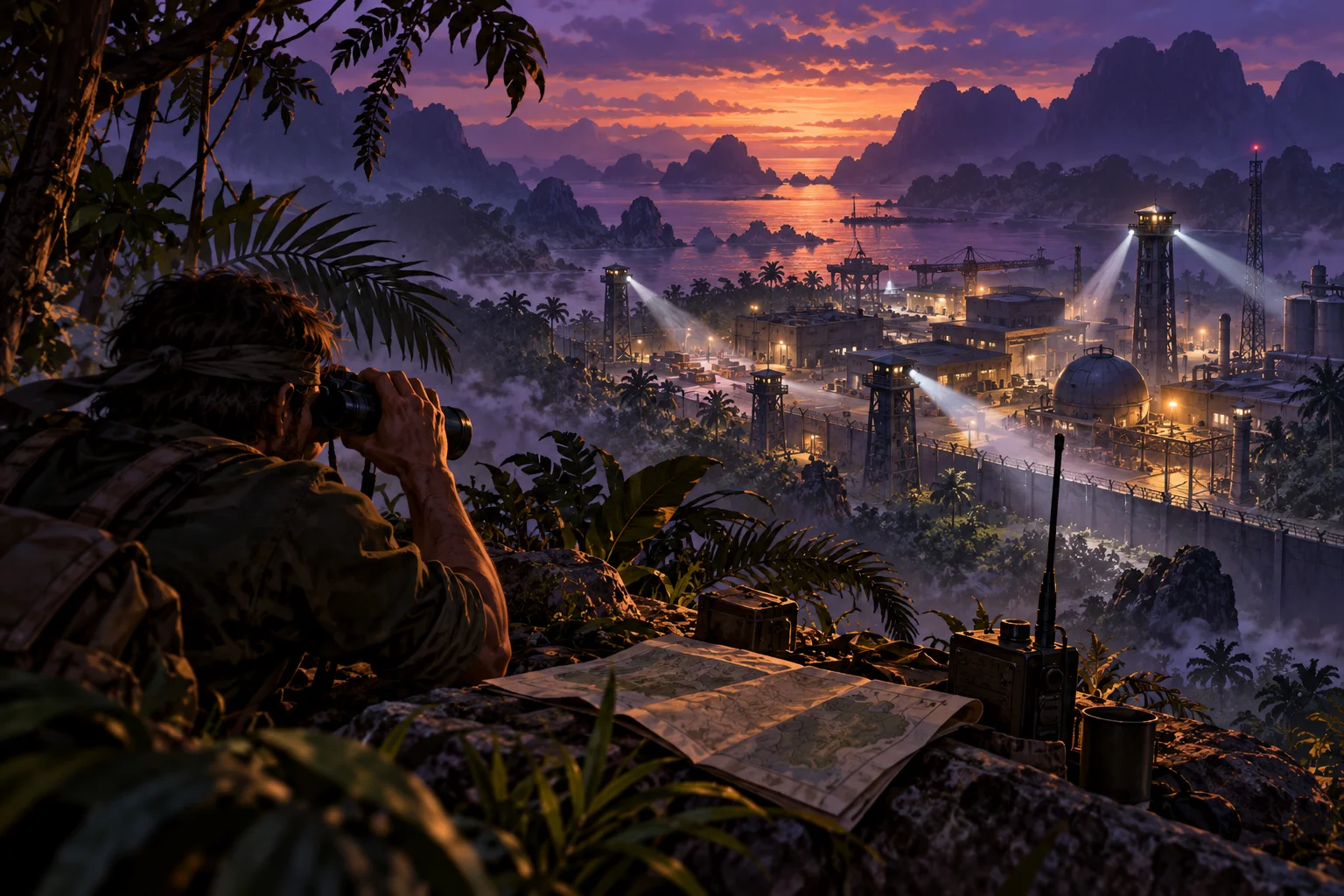
Check the subtitle carefully: Portable Ops and Portable Ops Plus are not interchangeable purchases or library entries. This guide focuses on selecting a solo campaign, while our PSP stealth games guide compares alternatives beyond Metal Gear.
On this page
Peace Walker: missions and the organisation behind them
Peace Walker follows Big Boss in 1970s Costa Rica and develops the recruitment ideas used in Portable Ops. The game links stealth missions with building up the organisation that supports them.
Choose it if improving your preparation between missions sounds as appealing as completing the next objective. A mission is not just an isolated test: it gives you a reason to rethink equipment and what your wider operation needs.
For a first session, focus on the basic movement and detection rules. Learn one quiet approach before trying to optimise the whole organisation. A guide full of advanced efficiency targets can make a new campaign feel like a checklist before you understand why the choices matter.
Portable Ops: the earlier handheld approach
Portable Ops is an earlier PSP Metal Gear Solid entry built around infiltration and recruitment. It offers another perspective on adapting the series to short, portable sessions.
Choose it if you want to explore that stage of the series or specifically follow its campaign. Do not begin only because its release came first: you should also be interested in its own structure. Conversely, someone exploring the handheld games historically may prefer to play it before Peace Walker and observe what changed.
Treat the first mission as a chance to understand the camera and controls. Compare an unsuccessful approach with a slower one. If the second attempt works because you observed a guard first, you have learned something more reusable than the location of a single enemy.
Portable Ops Plus is a separate choice
The “Plus” name can look like a complete edition of Portable Ops. Do not assume it contains the same story campaign with extra material. It is a separate release with a different emphasis, so it is not the default recommendation when your goal is the original Portable Ops narrative.
If a listing gives only a shortened name, verify the title on the package or title screen. The same rule applies to HD versions of Peace Walker on other platforms: they are not PSP files simply because they share the story.
Keep save data associated with the edition that created it. This guide does not establish cross-edition save compatibility.
A stealth routine that transfers between missions
Before moving, identify the next safe observation point. Watch one enemy route and decide what you will do if the situation changes. A retreat plan is useful even when you intend to finish without being spotted.
After detection, avoid changing every part of the approach at once. Try a different timing or a different route and compare the result. If you change equipment, route and pace simultaneously, you may succeed without understanding why.
Mission-based games reward a focused experiment. Choose a target such as reaching one checkpoint quietly rather than demanding a perfect performance across an unfamiliar area.
Playing the PSP versions in EMUspace
Use your own supported copy and the PSP setup instructions. Confirm the subtitle and practise the original control scheme before following a tutorial made for a later console version.
Peace Walker’s original release promoted cooperative play, but that historical feature is not evidence of working networking in EMUspace. The recommendations here concern solo play. EMUspace Pro provides Bluetooth controller support and additional saving tools; it does not make an unverified multiplayer feature part of this guide.
Keep exploring
Sources and edition notes
This guide discusses the original PSP releases. Publisher articles about later reissues are used for historical context; reissue features are not assumed to exist in the originals or in EMUspace.