
Harvest Moon: Back to Nature — Your First Spring
For a comfortable first spring in Harvest Moon: Back to Nature, plant a small crop you can water, forage for extra income and expand only after the daily work feels manageable. You do not need to clear the entire farm or complete a perfect money route immediately.
Use a Back to Nature guide
This is the original PS1 game, not Friends of Mineral Town on Game Boy Advance or its Story of Seasons remake. Familiar villagers and locations can make those guides look relevant even when an event, tool or recipe requirement differs.
The game is an appealing change of pace from the adventures in our PS1 RPG selection. Progress comes from repeated small decisions: what to plant, how much work to accept and which purchase will make tomorrow easier.
Clear a working garden, not the whole farm
Start by making room near your daily route. Remove the obstacles you can handle with your current tools, till a small planting area and leave an obvious walking path. Large obstacles can wait until the appropriate upgrades are available.
Seed placement and watering access matter. A bag covers a patch, but the starting watering can does not make every dense arrangement convenient. Leave access to the plants you need to water; a missing tile can be a reasonable trade for a layout you can maintain. A field that looks efficient from above is not efficient if you cannot reach its middle.
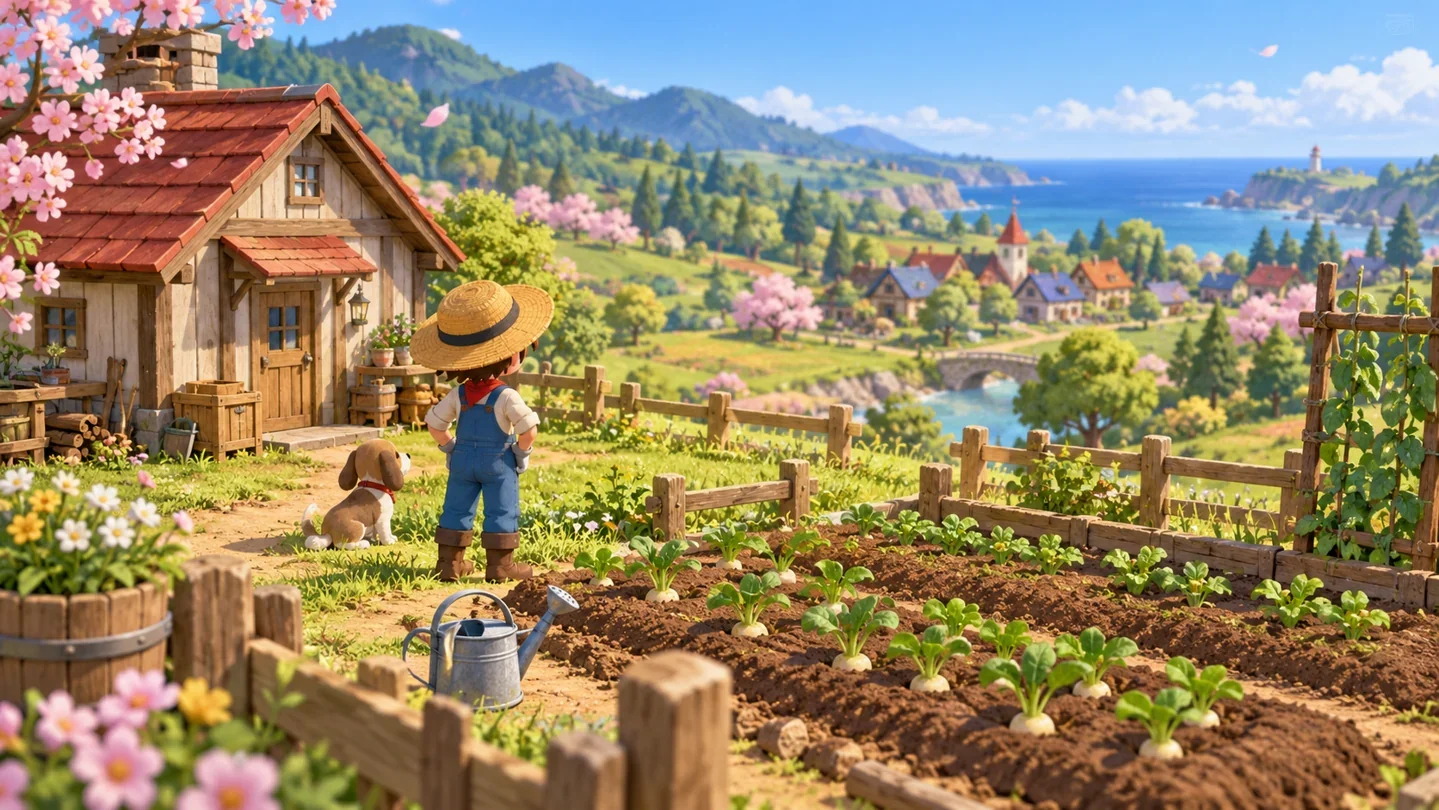
For the first crop, try a modest turnip planting. It gives relatively quick feedback: you learn the routine, harvest, sell and decide whether to repeat or diversify. Treat this as an approachable start, not a claim that turnips maximize every possible profit calculation.
| Spring choice | Why consider it? | What to remember |
|---|---|---|
| Turnips | A short first growing cycle. | Replant after harvesting. |
| Potatoes | An alternative single-harvest crop. | The first return takes longer than turnips. |
| Cucumbers | Continue producing after the first harvest. | They need enough season remaining for repeat harvests. |
| Cabbage | A different spring investment. | Won sells these seeds; do not assume every seed is at the supermarket. |
| Strawberries | A later spring option once unlocked. | They are not an unrestricted day-one purchase. |
Give each day a simple order
Check the television weather forecast, tend the crops and any animals you own, then decide what fits in the remaining time. Foraging around the mountain provides spring items such as bamboo shoots and blue grass. It can help fund the next purchase while the crops are growing.
- Handle obligations first. Existing plants and animals deserve attention before a new project.
- Choose one trip through town. Combine shopping and conversations instead of repeatedly crossing the map.
- Forage along a planned route. Carry useful items home rather than filling every trip with aimless running.
- Watch your farmer’s condition. Pause heavy work before exhaustion becomes your usual stopping signal.
- Finish with a clear plan. Decide whether tomorrow needs seeds, supplies or simply another ordinary day.
This routine leaves room to meet villagers and notice events. A maximum-income checklist can be useful on a replay, but it often asks a newcomer to optimize systems they have not yet seen.
Spend on the bottleneck you actually have
Keep enough money for the next crop and the care of any animals you buy. A chicken adds a daily responsibility, not just an income figure. Before purchasing one, make sure you understand feeding and have a comfortable daily route through the farm.
More carrying space helps if you routinely abandon useful items. A tool upgrade helps when that tool is limiting the work you already do. Neither is automatically more urgent than everything else. Ask which purchase removes a problem you encounter every day.
Plan watering-can upgrades carefully: the tool will be unavailable while it is being improved. Weather information can help you choose a less disruptive window. Do not hand it over merely because you have the materials, then discover that your entire field depends on it.
Prepare for summer before spring ends
Crops belong to seasons. Before a late planting, check whether it can mature before the season changes. Guides sometimes count growth days differently depending on whether the planting day is included, so compare the actual planting and harvest dates rather than relying on an isolated number.
Recipes are another longer-term project. Learn about the kitchen and equipment before buying ingredients for a recipe list; cooking is not the main first-day task. For now, a working field, a money reserve and a familiar route through town are worthwhile achievements.
Keep normal saves as the season progresses. Our guide to saves and save states explains how to preserve a clear history. If preparing your own PS1 files, the BIN/CUE guide covers their organization separately from farming advice.
First-spring questions
Must I clear the entire field immediately?
No. Clear the space you can use and maintain. Expanding gradually is a reasonable first-play strategy.
Why can’t I buy every spring seed?
Some seeds are sold by a different merchant, and some require unlock conditions. Cabbage and strawberries are useful examples.
Should I follow a perfect first-year checklist?
Only if that style is enjoyable. A first spring can be successful without reaching every optional milestone.
Can I use a Friends of Mineral Town recipe guide?
Use a Back to Nature reference instead. Similar characters do not make the recipes, events and unlock conditions identical.
Sources and scope
Game mechanics were checked against the original Back to Nature manual, Ushi No Tane’s Back to Nature crop reference, Sky Render’s original-game walkthrough. The starting priorities are editorial recommendations, not a report of a game-specific EMUspace test.